
The biggest surprise for most homeowners isn’t the cost of finishes. It’s what happens when walls are opened and a century of previous decisions are revealed.
Knob-and-tube wiring that someone once extended with romex and electrical tape. A drain line running through the middle of what should have been a straightforward wall removal. Floor joists sistered with whatever lumber was available in 1962. Old houses aren’t hiding secrets — they’re accumulating history. Knowing that going in changes everything about how you plan, how you budget, and how you keep from having a breakdown in month three.
Historic home renovation cost in Denver varies more than most contractors will tell you upfront — and the reason it’s so difficult to predict has very little to do with your finish selections. Here’s how I actually think about it.
What Drives Historic Home Renovation Cost in Denver
Every project is different, but the same factors surface every time. Age of the house, scope of work, materials, structural condition, systems, permits, design, and contingency. Each one pulls the budget in its own direction. Understanding all of them before demolition starts is the difference between a renovation that finishes on budget and one that doesn’t.
During a recent addition to an 1886 Victorian in Curtis Park, we anticipated using an existing wall cavity as a chase for new mechanical systems. Once the wall was opened, the available space was significantly smaller than the original drawings suggested — not wrong, just different from what we’d planned around. We rethought a portion of the layout in the field and kept moving. It didn’t blow the budget. But it was a clear reminder that historic homes don’t always reveal their full story until construction begins. Sometimes the house gets a vote.
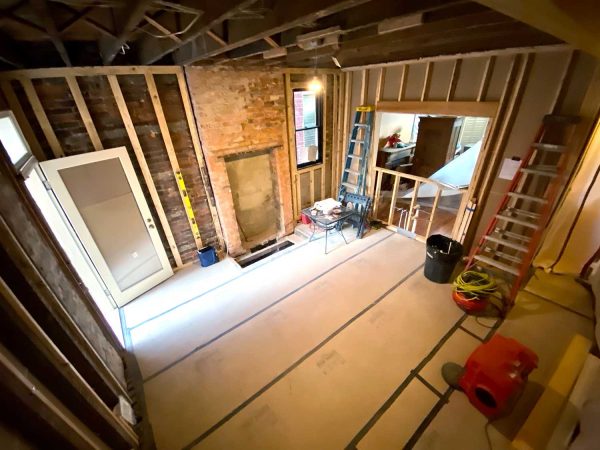
That’s the thing most cost guides won’t tell you: historic home renovation cost in Denver isn’t determined solely by what you’re planning to build. It’s also shaped by what the house decides to show you.
Age of the House
A 1960s ranch and an 1911 Victorian may look like they belong in the same renovation conversation, but they rarely do. The older the house, the more building eras are layered inside it — and the more likely you are to find incompatible systems stacked on top of each other. A home built in 1889 has had nearly 140 years of owners, each of whom made decisions that made sense to them at the time. Some of those decisions are lovely. Some of them are your contingency fund.
Pre-1940 homes in Denver routinely surface lead paint, asbestos in floor tiles or pipe insulation, and original plaster that’s been patched with drywall compound by someone who didn’t understand what they were working with. None of that is a reason not to renovate — it’s a reason to know what you’re walking into.
Scope of Renovation
A kitchen relocation is fundamentally different from a kitchen refresh. Moving a bathroom to a new footprint is an order of magnitude more complex than updating fixtures in place. The cost variable that matters most isn’t what you’re putting in — it’s what you’re moving.
I ask clients early: are we working within the existing footprint, or are we rethinking it? Staying in place means working with what the house already offers — its window positions, its structural rhythm, its original flow. Changing footprint means engaging structural engineering, permitting, and often discoveries in the process of demolition that no amount of pre-planning fully anticipates.
Neither approach is wrong. They just cost differently — and they require different kinds of patience.
Historic Materials
This is where I spend the most time, and where the work gets interesting.
Old-growth Douglas fir. Old-growth white oak. Single-pane divided-light windows with original glass that has a slight wave to it that no reproduction matches. Quarter-sawn oak flooring that hasn’t been available at commercial widths since the 1930s. Historic homes contain materials that simply can’t be bought new — which means restoration is almost always the right call over replacement, and restoration takes time.
Matching historic trim profiles requires custom millwork or patience sourcing from architectural salvage. Denver has good salvage resources — I use them constantly — but salvage requires more lead time than a box store run, and it requires someone who knows what they’re looking at. Matching a plaster profile for repairs isn’t something a general contractor learns on your project; it’s something they either know or they don’t.
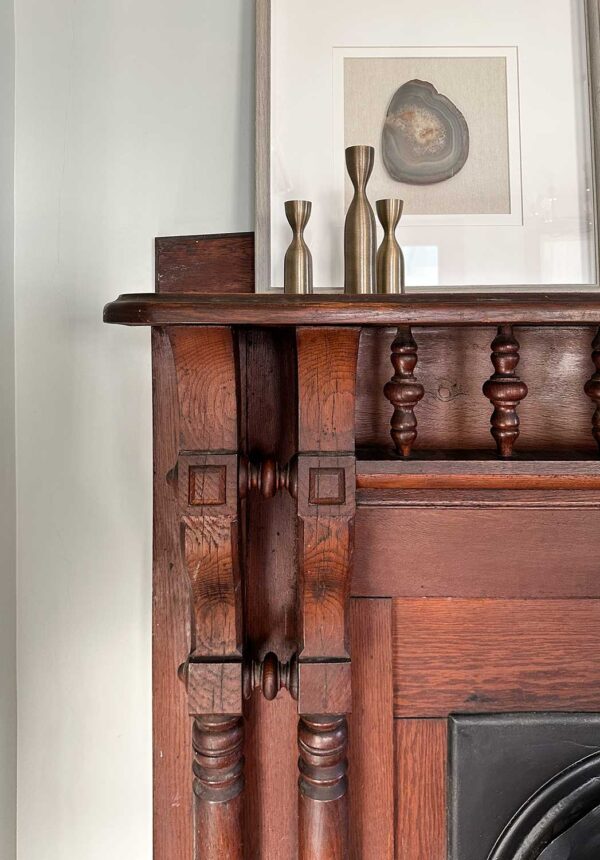
Much of my work is in Denver’s older neighborhoods — Capitol Hill, Curtis Park, Whittier, Potter-Huffman — where preserving original character is often just as important as improving how the home functions. The materials are a significant part of why those homes are worth renovating in the first place.
Material costs in historic renovation are highly variable. A straightforward restoration pass on original trim might run $3,000–$6,000 in labor and materials. Period-accurate hardware — bin pulls, cup pulls, porcelain knobs — is more available than most homeowners expect, and replica options run close to what you’d pay for high-end contemporary hardware. It’s not the budget line that should give anyone pause. Windows are their own category: a high-quality historic window restoration, weatherstripped and reglazed, runs $400–$800 per window. Replacement with period-appropriate units, when restoration isn’t viable, runs considerably more.
Structural Work
This is where budgets get rewritten. Not always, but often enough that I build contingency into every project specifically for what the framing reveals.
Denver’s older homes were built without the subfloor systems we take for granted today. Joists may be undersized by current code, or sized correctly but damaged by a century of moisture intrusion, pest activity, or the undersized additions tacked on in the 1950s. A structural engineer is not optional on a meaningful historic renovation. It’s one of the first calls I make.
Structural engineering fees vary considerably depending on the scope of the assessment and what the engineer finds. Every home is different enough that a single number isn’t useful here — what matters is building the fee into your budget from the start, before you know whether you’ll need a simple letter or a full set of engineered drawings.
Plumbing and Electrical Updates
The two systems that most reliably introduce budget variance are the two you can’t see until demolition begins.
In Denver’s historic homes, galvanized steel supply lines are common in anything built before 1960. Galvanized corrodes from the inside out — water pressure drops and water quality degrades over time, but the pipes can look intact from the outside while being severely restricted within. Opening walls for a kitchen renovation routinely reveals plumbing that needs to be replaced regardless of the original scope.
Electrical tells a similar story. Homes built before 1940 often have original knob-and-tube wiring. Homes updated in the 1950s and 60s frequently have aluminum branch circuit wiring, which requires specific handling. Neither automatically disqualifies the house — but both require a licensed electrician who understands what they’re looking at.
For a major renovation in an older Denver home, budget $8,000–$20,000 for electrical updates alone if you’re touching multiple rooms. Plumbing in a bathroom addition or kitchen relocation runs $6,000–$15,000 before you’ve chosen a single fixture.
Permit Requirements
Permit costs are usually not what surprises homeowners. Permit complexity is.
In Denver, permit fees are generally based on the scope and valuation of the project. A bathroom renovation that keeps everything in place will have very different permitting requirements than a kitchen expansion, addition, or structural modification.
Historic homes introduce another layer of review. Depending on the location of the property and the scope of work, projects may require additional review from Denver’s historic preservation staff before permits can be issued.
In my experience, the greater cost is often not the permit itself — it’s the time required to prepare drawings, coordinate consultants, respond to review comments, and move a project through the approval process. Current permit timelines in Denver run 4–16 weeks depending on scope. Delays have a cost, too.
When budgeting for a historic renovation, think about permitting as both a cost item and a schedule item.
Most kitchen and bathroom remodel permits are measured in hundreds of dollars rather than thousands. But permit fees are only one piece of the equation. Engineering, historic review, consultant coordination, and plan preparation can add substantially more to the overall project budget — and any of them can extend your timeline if they surface a condition that requires a redesign before review can proceed.
Design Fees
Every contractor website lists a cost range. Almost none of them account for what it actually costs to think through the project correctly before the first hammer swings.
A well-designed historic renovation costs less than a poorly designed one — not because design is cheap, but because decisions made on paper don’t cost $400 an hour in GC time to fix. I’ve walked into projects where the absence of design documentation meant that framing decisions made during demo couldn’t be undone without significant cost, because no one had resolved those questions before construction started.
Design fees for a historic renovation in Denver run between 10–18% of construction cost depending on scope and complexity. On a $200,000 renovation, that’s $20,000–$36,000. On a $75,000 bathroom addition, it’s closer to $8,000–$12,000. Those fees are doing real work: resolving conflicts before they hit the field, sourcing materials appropriate to the house, and keeping the project from drifting into something the house can’t absorb.
Not every older home project is considered historic preservation. Understanding the difference between historic preservation and historic renovation can help homeowners make better decisions about budget, materials, and project scope.
Contingency Planning
Hold 15–20% of your total budget in contingency and treat it as already spent. If you don’t need it, that’s a good month. If you do — and in historic renovation, you often will — you’ll have it.
The homeowners who struggle most are the ones who budgeted to the last dollar and then opened a wall. Not because they made poor decisions, but because they had no margin for what the house decided to show them. Contingency isn’t pessimism. It’s respect for what you don’t yet know.
The houses I work with were built to last 200 years. They deserve to be renovated by people who take them seriously — which means knowing what you’re walking into, and building a budget that can absorb what you find when you get there.
Typical Historic Renovation Ranges in Denver
- Historic bathroom renovation: $35,000–$120,000+
- Historic kitchen renovation: $70,000–$300,000+
- Whole-home historic renovation: $100,000–$400,000+
These numbers are planning ranges, not estimates. Two homes built in the same year can have dramatically different renovation costs depending on what is discovered during demolition.
At Studio Olio, much of our work focuses on Denver’s historic homes, where preserving character is just as important as improving function.
Frequently Asked Questions
How much does historic home renovation cost in Denver? Most historic home renovation projects in Denver run between $100,000 and $400,000 depending on the age of the home, scope of work, and what surfaces during demolition. Smaller targeted renovations — a bathroom addition or kitchen update within an existing footprint — typically fall between $60,000 and $150,000. Whole-home renovations, structural modifications, or projects within a designated historic district run higher. The most reliable budget is one that includes a 15–20% contingency from the start.
Why is historic home renovation cost in Denver so difficult to predict? Because the budget isn’t determined solely by what you’re planning to build — it’s also shaped by what the house reveals during demolition. Original systems, previous modifications, hidden structural conditions, and material matching requirements all influence cost in ways that can’t be fully known until walls are opened. That’s not a reason to avoid the project. It’s a reason to plan with appropriate contingency and work with someone who has seen it before.
Why does historic home renovation cost more than standard renovation in Denver? Old houses require specialists, not generalists. Original materials — plaster, old-growth lumber, divided-light windows — can’t be matched with stock products. Systems hidden inside walls often need full replacement once exposed. And in Denver’s historic districts, design review adds time and constrains material choices in ways that affect cost. The work takes longer, requires more decisions, and rewards experience that’s specific to pre-1960 construction.
Does Denver require special permits for historic home renovation? Yes. Homes within Denver’s designated historic districts — including Potter-Huffman, Curtis Park, and Wyman — require design review before permits are issued. That review governs exterior materials, window replacement, and additions visible from the street. Even outside historic districts, structural modifications to pre-1940 homes trigger additional plan review. Budget 4–8 weeks for permit processing on any project involving structural work or footprint changes.
How do I find a designer who specializes in historic home renovation in Denver? Look for someone with direct experience in pre-1960 homes — not just older homes in general, but the specific eras and styles common to Denver’s historic neighborhoods: Victorians, Foursquares, Craftsman bungalows, Colonials. Ask to see projects, ask about their relationship with the city’s historic preservation office, and ask what they do when demolition reveals something unexpected. The answer to that last question tells you most of what you need to know.
Studio Olio specializes in historic home renovation in Denver and remotely. If you’re planning a kitchen renovation and want to understand what’s possible — let’s talk.