
1889 Victorian Kitchen Relocation
Richmond, Virginia
The Situation
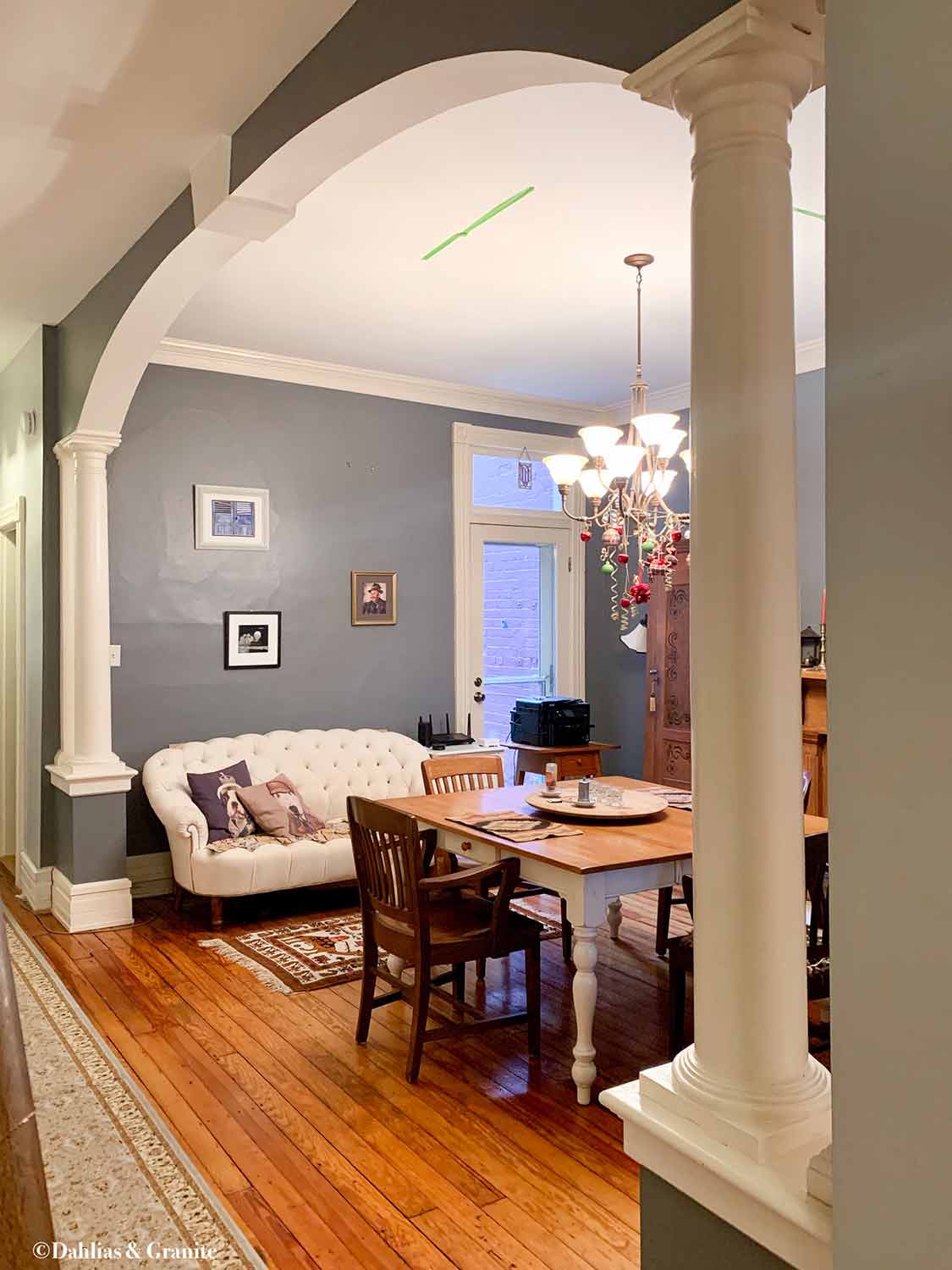
This Victorian kitchen renovation began with a house that had everything it needed — ten-foot ceilings, intact millwork, and a layout that still largely made sense — except for the way it had been altered over time. A 1990s renovation had inserted decorative columns and an arch into the dining room, dividing what had originally been a well-proportioned space into something that felt smaller and more constrained than it should have.
The kitchen was still operating as it had in the 19th century: small, back-of-house, disconnected from how the homeowner actually lived.
The Move
Rather than force a modern kitchen into a space that was never meant to hold it, the decision was to move the kitchen into the dining room — a room with the ceiling height, proportions, and central placement the kitchen needed to function well.
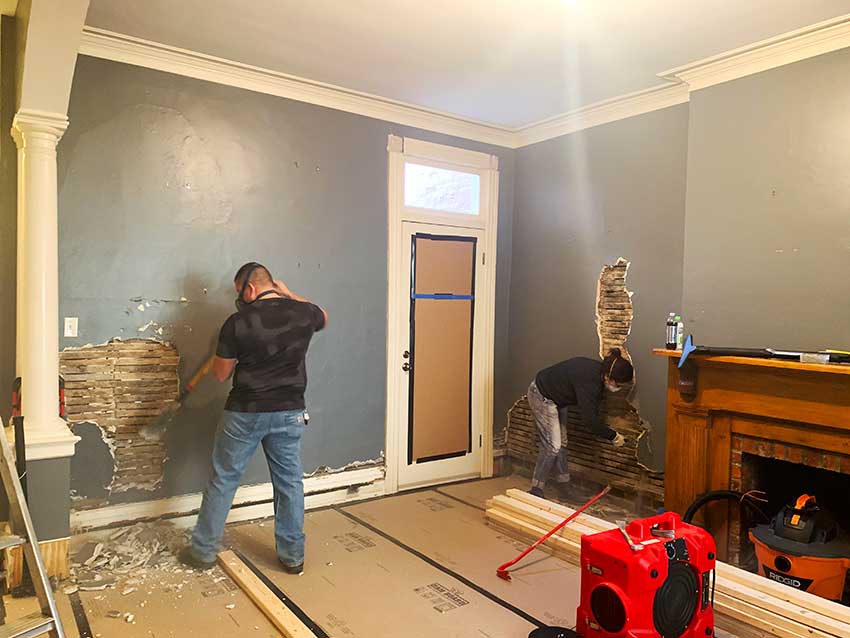
This required a series of adjustments guided by what the house revealed during demolition:
- A missing structural beam from a previous renovation was corrected before any new work began
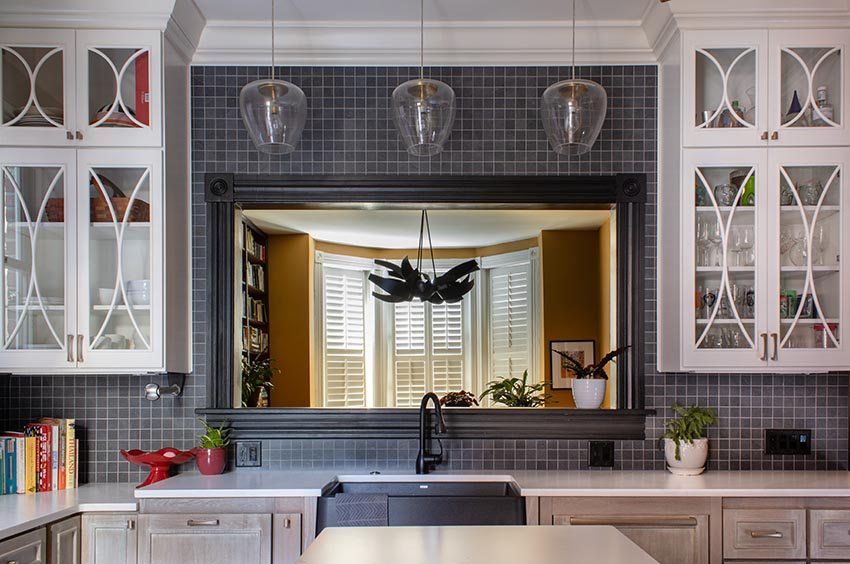
- A bricked-in original window was reopened, restoring natural light that had been absent for decades
- The non-original columns, arch, and keystone were removed, giving the room back its original proportions
- Original openings were preserved and adjusted rather than closed, maintaining how light moves through the home
Throughout the project, original elements were retained and restored wherever possible — heartwood pine floors, rosettes, plinths, door hardware, trim profiles, and millwork — with new work fabricated to match so closely that it becomes indistinguishable from what was already there.
The Result
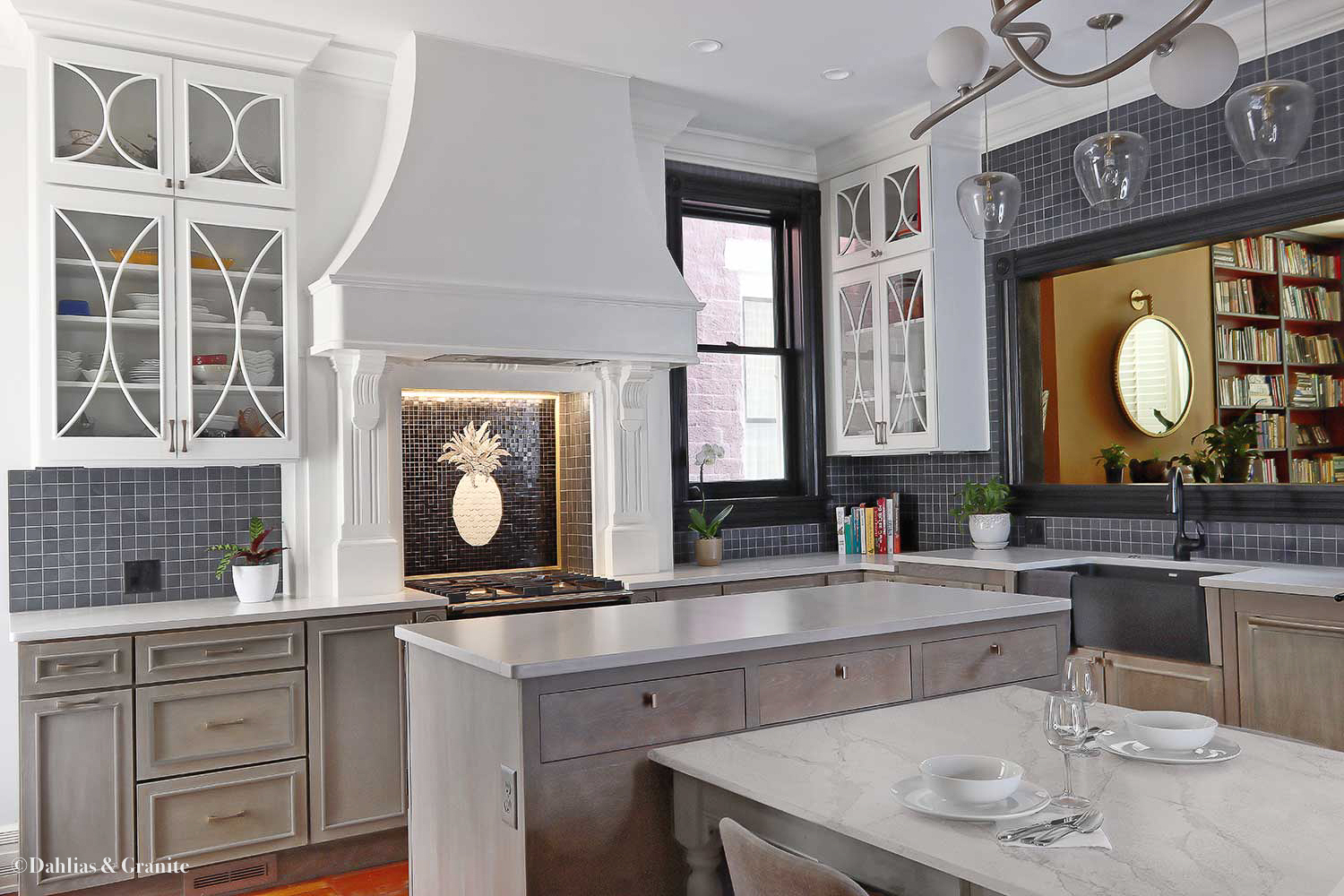
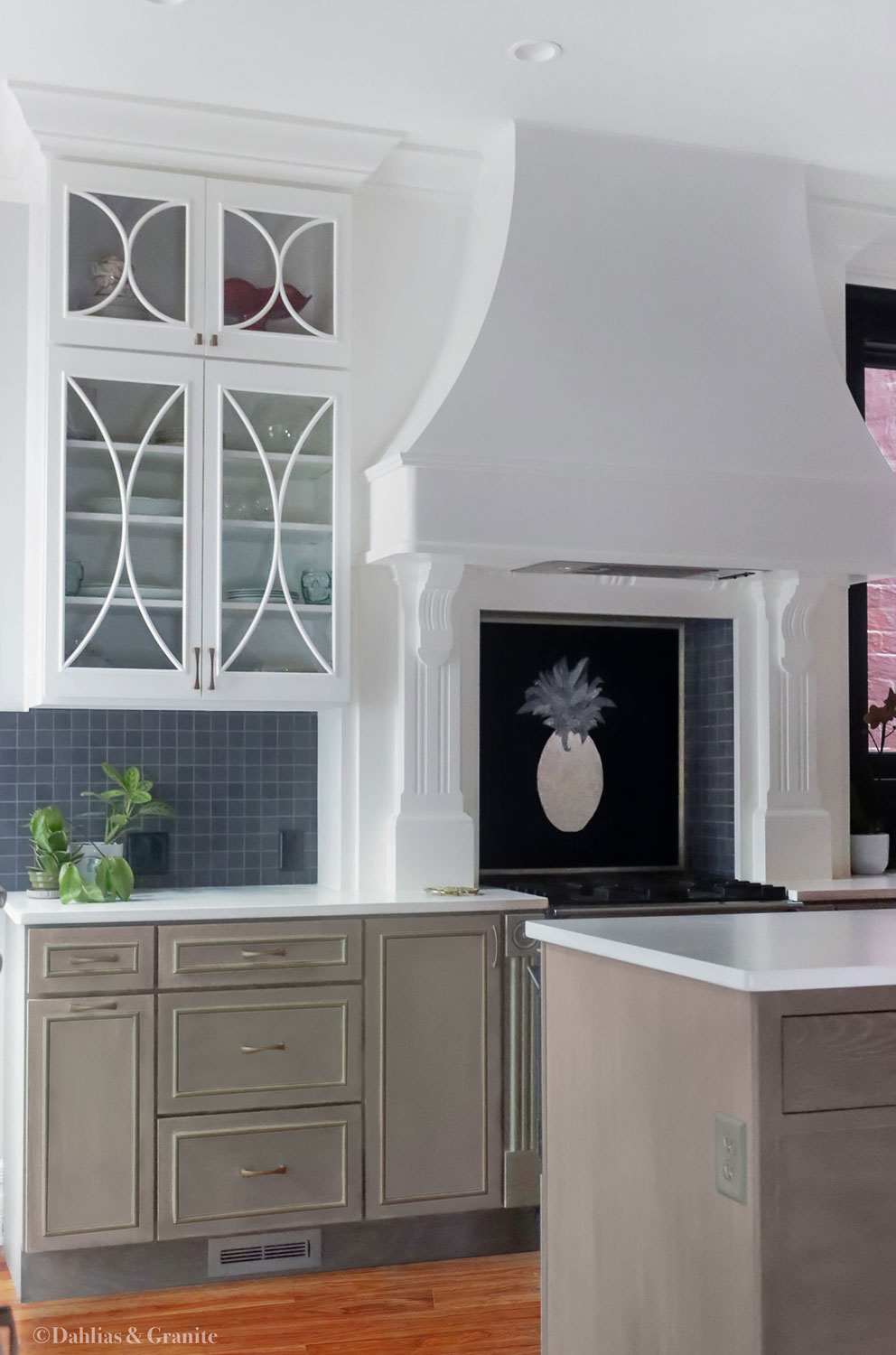
The original fireplace surround was deconstructed and rebuilt as a full-height range hood, allowing the range to sit exactly where the firebox once was.
The proportions, profiles, and painted finish remain consistent with the rest of the home, while a dark tile backdrop and a single pineapple detail quietly anchor the wall in the client’s own story. Custom cabinetry was designed in a tone that works with the original heartwood pine floors rather than against them. The layout allows the room to function in a continuous loop — separate zones for cooking, baking, and gathering — with a freestanding table that references traditional Victorian worktables while adapting to modern use.
What changed is everything — but the house absorbed it without a seam.
Details Scope: Kitchen relocation, structural correction, full interior renovation, bathroom renovation, outdoor living renovation Location: Richmond, VA
Studio Olio specializes in historic home renovation in Denver and remotely. If you’re planning a Victorian kitchen renovation and want to understand what’s possible — let’s talk.


Project Journal
Historic renovations are rarely defined by a single decision. This project is documented across three journal entries exploring the reasoning, construction, and finished result.
Why the Kitchen Moved
The decision to relocate the kitchen from the original rear addition into the former dining room.
Relocating a Kitchen in a Historic Home
Structural engineering, masonry work, millwork restoration, and the construction process.
Victorian Kitchen Renovation: The Finished Space
The completed kitchen, custom cabinetry, restored details, and final layout.
Related Journal Entries
Building an Outdoor Living Space in Historic Church Hill
Site preparation, drainage corrections, custom structures, and the early phases of construction.
Building the Patio, Ramp, and Gardens
Hardscape installation, planting design, and the final transformation of the outdoor spaces.
